
From first idea to fired piece
A few small steps. A record that grows.
Start with the piece in front of you. Pottery Log guides you through creating a project, adding the details you know and choosing who can see it. You can come back as your work progresses.
Start with up to 10 projects, free.
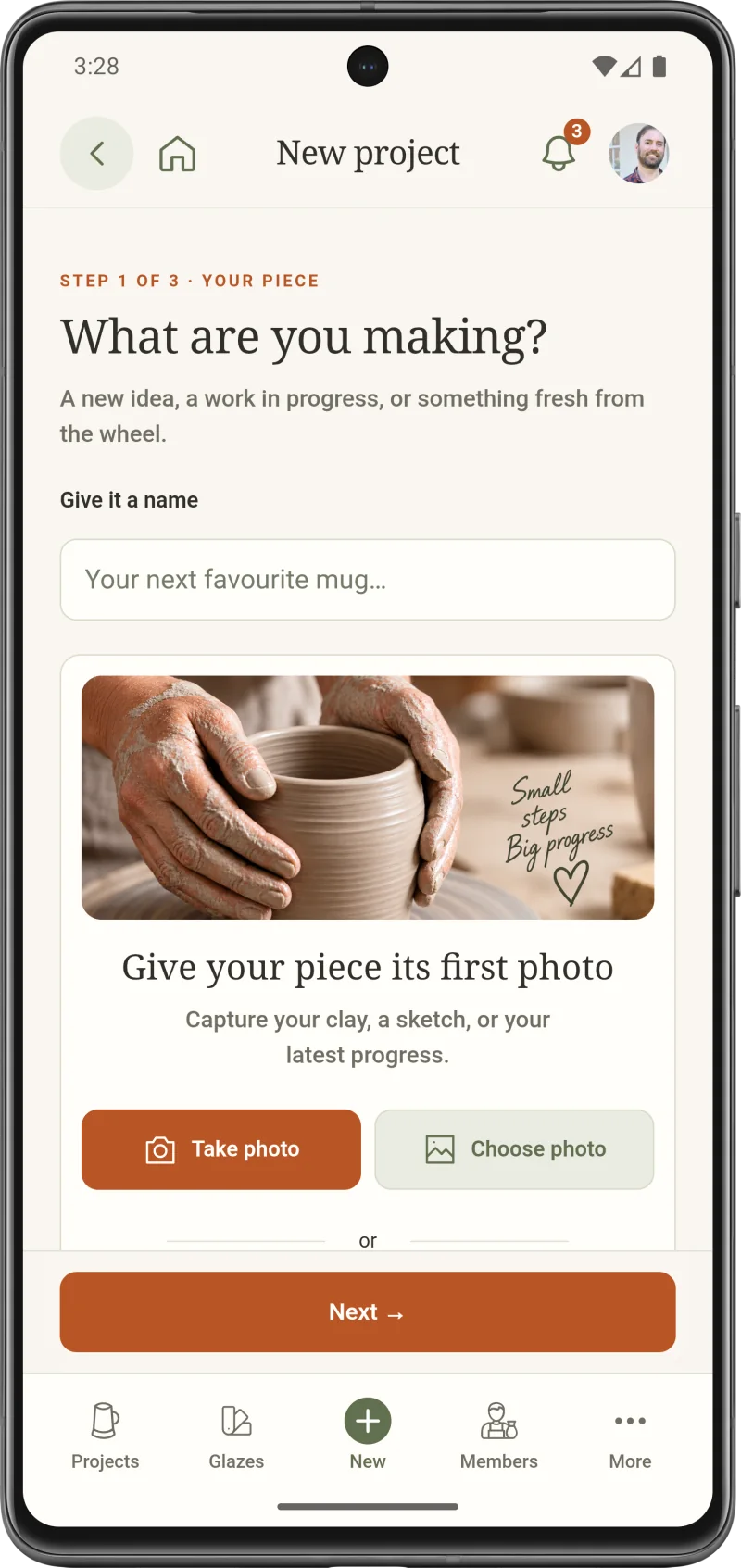
01 — Name your piece and add its first photo.
After signing in, choose New to start a project. Give your piece a name you will recognise later, then take a photo or choose an existing image from your phone.
A work in progress belongs in your journal just as much as a finished piece. Capture a sketch, the freshly formed pot or the first stage you want to remember, then choose Next.
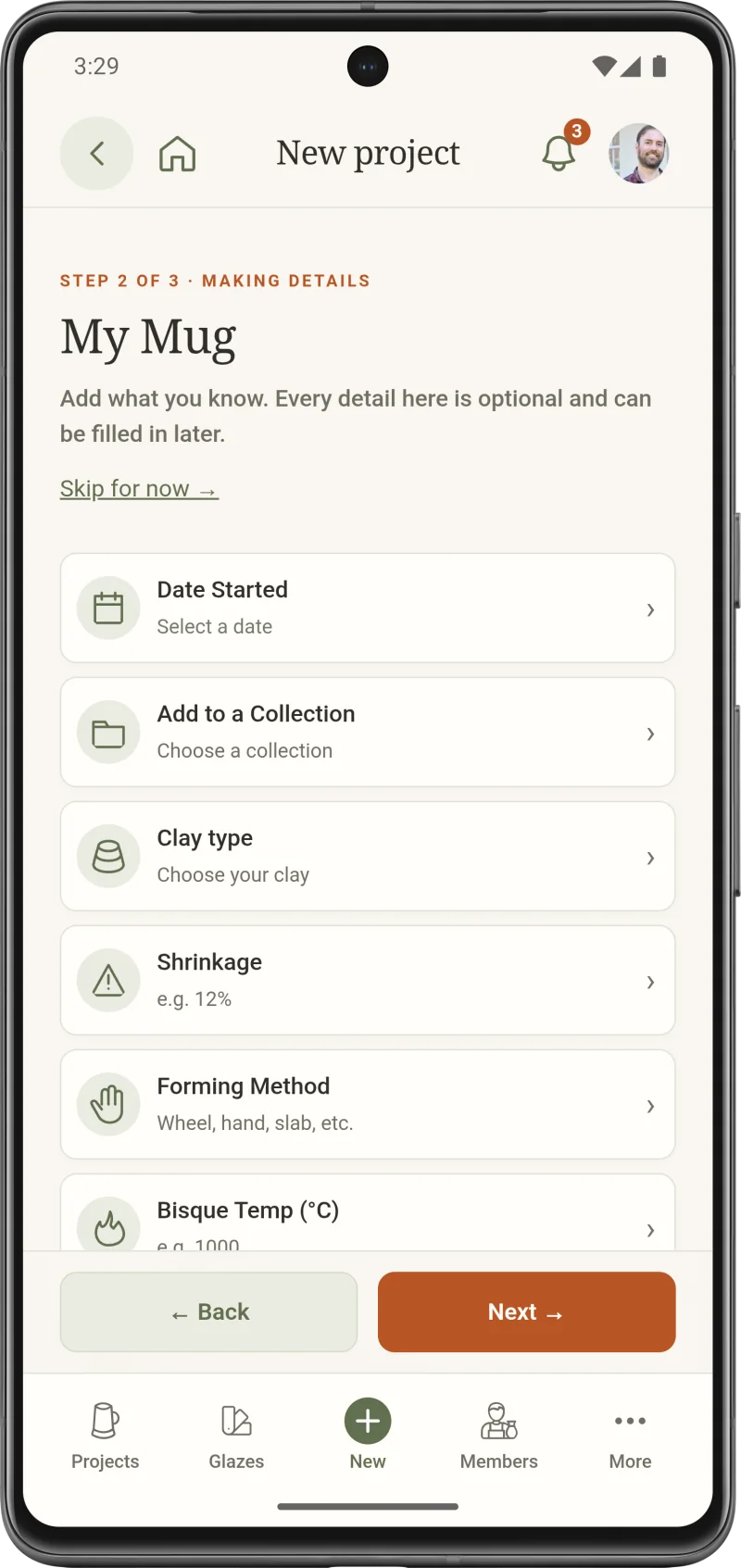
02 — Add the making details you know.
Record information such as the start date, clay type, shrinkage, forming method and bisque temperature. You can also add the piece to a collection when that feature is available in your plan.
The form lets you skip this step or leave details for later. If the piece has not been fired yet, leave the firing information until you have it. Check the units shown by the field when entering a temperature.
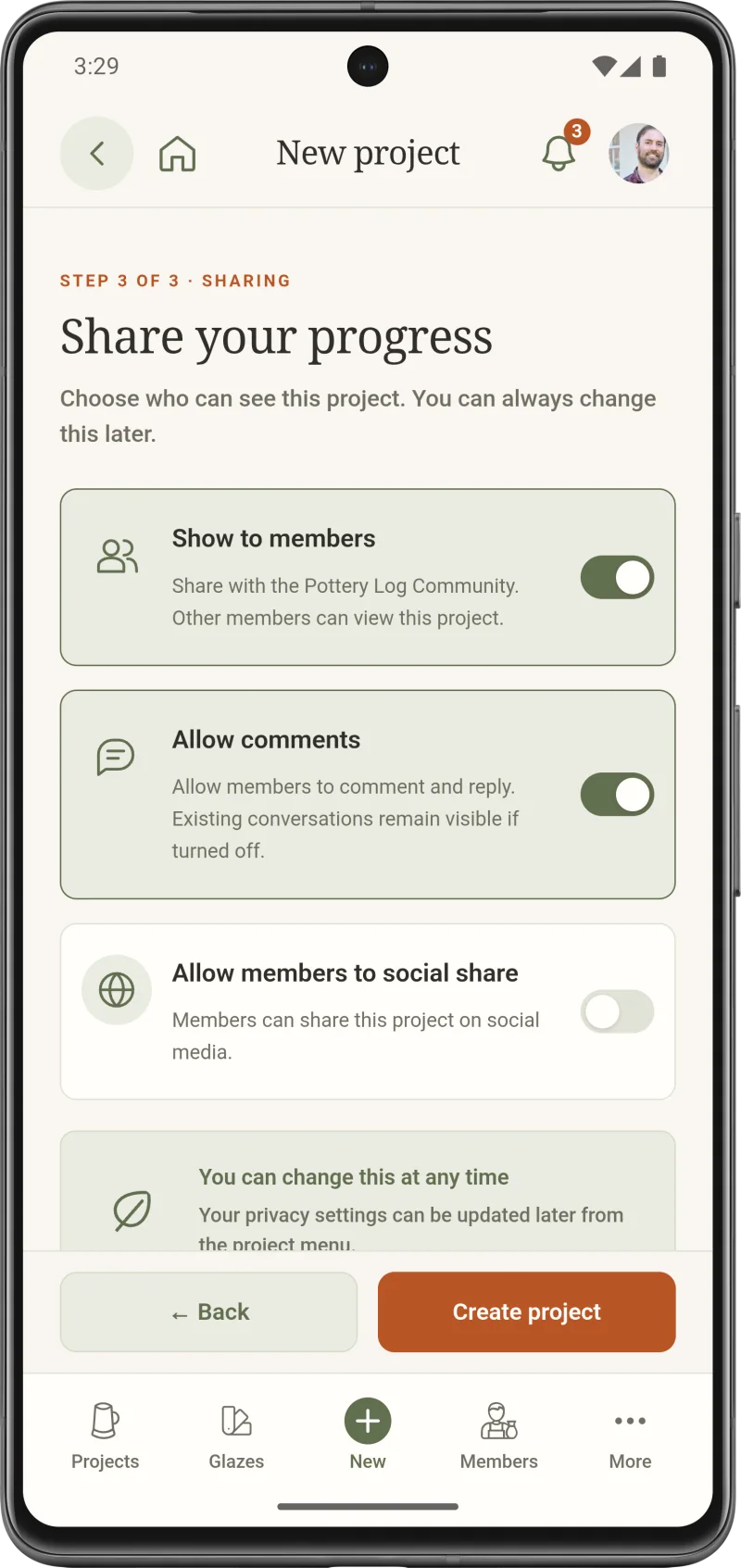
03 — Choose your sharing settings.
Before creating the project, review the switches for showing it to members, allowing comments and allowing members to share it on social media. Choose the settings that suit this piece.
You can change these choices later. Your profile also has visibility settings, so review those when deciding how you want to appear to the community.
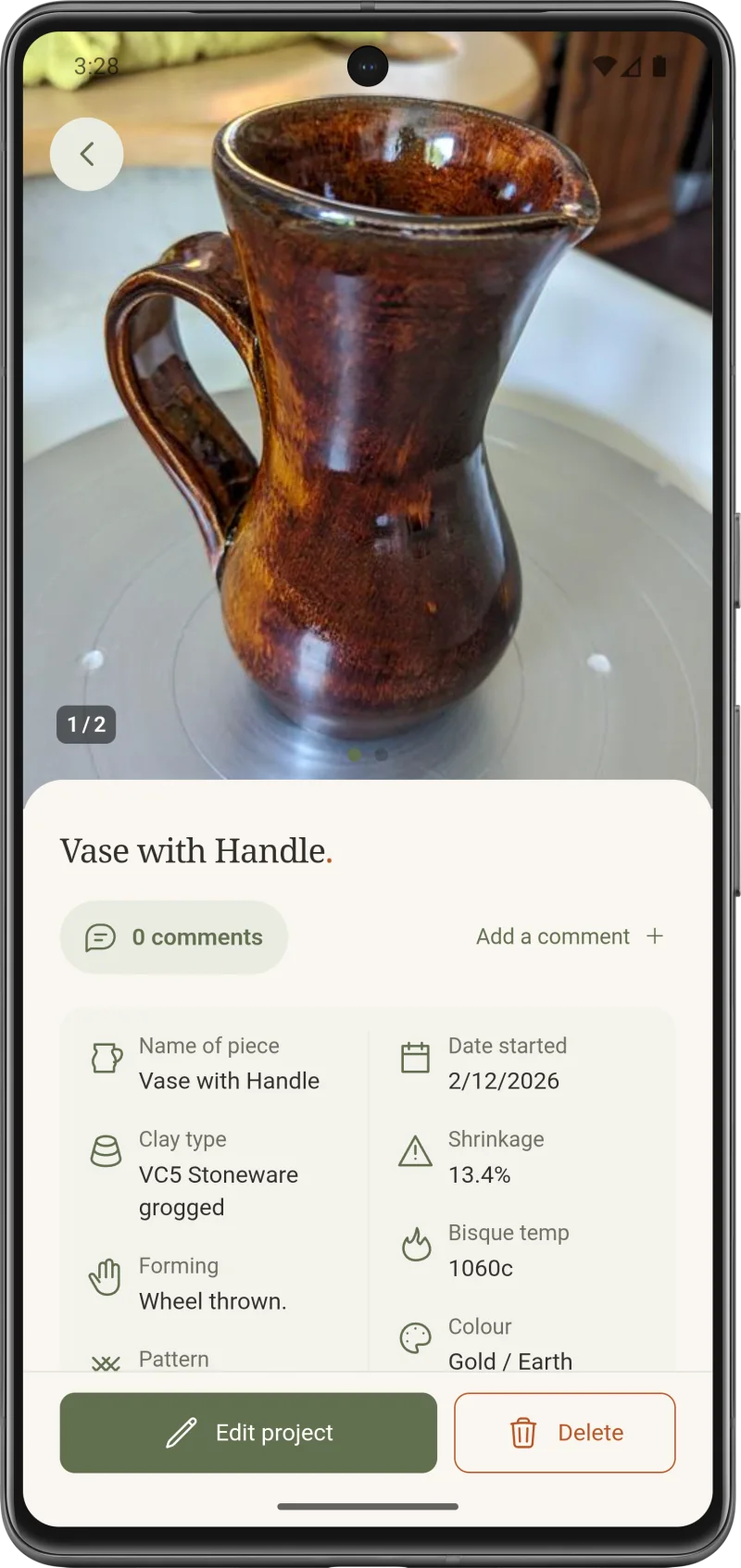
04 — Return to the piece as it develops.
Open the saved project and choose Edit project when you have more to add. Update the record after trimming, glazing or firing, and add photographs that show how the piece has changed.
After the final firing, write down one thing you want to repeat and one thing you would change. Your next project can begin with what the last one taught you.
Start small. Make it a studio habit.
You do not need to document every detail at once. A name, a photo and a useful note are a good beginning. Add the information that helps you understand your own work.